
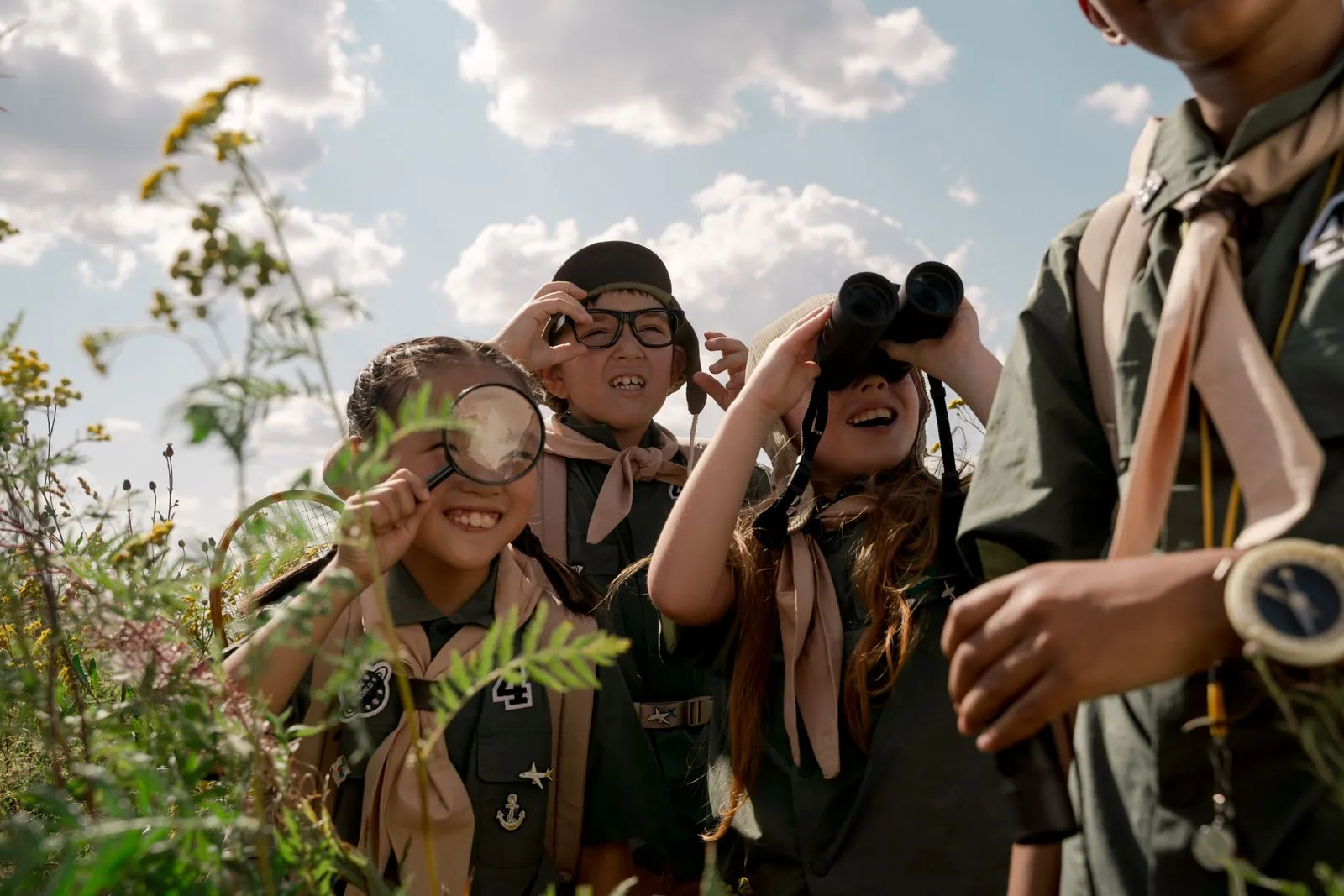
After a day indoors, a short outdoor activity can give children room to move, reset, and get curious. You don’t need special equipment or a remote trail: a yard, school grounds, or neighborhood sidewalk can offer plenty to notice. Try one simple prompt at a time, such as looking for tracks or comparing leaves. Keep the pace relaxed, follow local safety rules, and let children’s questions guide the adventure.
Start With a Slow Look
Invite children to pause in one safe spot and quietly look around for a minute. Ask what they can see, hear, and smell. They might notice a bird on a fence, ants near a crack, wind moving grass, or the sound of leaves. Give children time to answer without correcting or rushing them. The goal is careful noticing, not finding something rare.
Turn the prompt into a short scavenger hunt: look for something rough, something that moved, something shaped like a circle, and something that changed color. Ask children to point rather than collect. This keeps living things and shared spaces undisturbed while giving each child a way to take part.
Look for Signs of Wildlife
Wildlife can be present even when no animal is in sight. Look for feathers, spiderwebs, chewed leaves, bird calls, or small tracks in mud or snow. Ask, “What might have been here?” and invite children to share more than one guess. Treat clues as possibilities, and avoid disturbing nests, dens, or animals.
Try a bird-listening break. Stand still, close your eyes if comfortable, and count different bird sounds for a short time. Then look toward the sounds and notice where the birds are—high in a tree, near a roof, or on the ground. Remind children to watch from a respectful distance and never feed wildlife unless local guidance says it is appropriate.
Notice Seasonal Changes
Choose one nearby tree, garden bed, or patch of grass to revisit. Ask children to describe what looks different today: Are there buds, fallen leaves, fresh growth, frost, or signs of rain? Use specific observations instead of asking only whether they like the season. A simple phone photo or a few words in a notebook can help children compare what they notice on later walks.
Make a weather check part of the outing. Feel the air, look at the clouds, and notice whether the ground is dry, damp, frozen, or muddy. Ask how the weather might affect plants, insects, and birds. Children can draw a quick picture or choose a word for the day’s conditions, building observation skills without needing to identify every species.
Keep It Safe and Simple
Pick a familiar route, set clear boundaries, and check the forecast before heading out. Dress for the conditions, including sturdy shoes and layers when needed. Adults should supervise children near roads, water, steep slopes, and unfamiliar areas. If you explore public land, follow posted rules and stay on marked paths where required.
Let children choose between two or three prompts, and keep the outing short enough to end while curiosity is still high. Leave plants, insects, and other natural finds where they are, and wash hands after exploring. If a child asks a question you can’t answer, make it a shared mystery to investigate later.
A few minutes of outdoor attention can turn an ordinary after-school stretch into a small discovery. Choose one prompt, explore a familiar place, and let children lead with their observations. Curious Creek Nature Club offers nature-focused after-school experiences in Madison for families looking for more ways to explore outdoors.